Des Moines's Best Bat Removal
We've been voted Des Moines's best bat removal company the past two years!
Get in touch
Bat Experts
Rapid Response
Trained & Educated
Licensed & Certified
About Des Moines Bat Removal
Welcome to desmoinesbatremoval.com. We are the only qualified bat removal company in Des Moines, Iowa. It can often be small signs that will give away the presence of pest animals in a property, such as a musty odor or the faint sounds that they make as they move about in an unseen part of the building. However, if you happen to be outside your property in the dusk or dawn period, a stream of bats emerging from a space beneath a loose tile or a damaged vent can make it very obvious as well if you have bats in the attic. Whatever your situation, our friendly telephone team will happily take your call, and can offer practical advice as well as arranging for one of our specialists to visit your property. All of our animal removal specialists carry the appropriate license and insurance to carry out animal removal work, as well as being highly trained and experienced in the industry. If you ever come across someone who suggests using poison or chemicals to drive bats away, they should be avoided, and we will never use these to deal with a bat infestation. Exclusion is a much friendlier and more efficient approach when dealing with bats, and we can quickly resolve the bat problem for you. Our specialist will also seal the attic or loft space and repair all the holes the bats were using to get in and out, so that another bat colony won't be able to use the same access points to get back in to your property. We operate 24-7-365, so don't hesitate to call us at 515-815-7001 to discuss your bat problem and schedule a fast appointment.
Residential
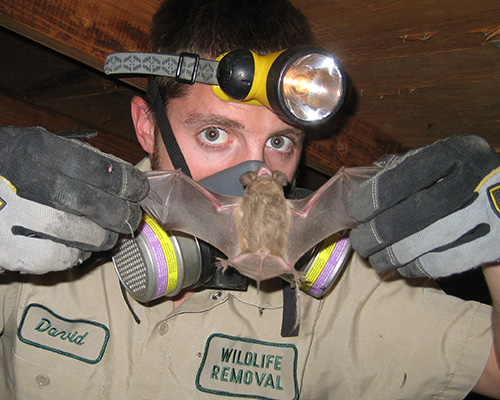
We are experts at removing bats from residential properties. Whether you have a single bat trapped in your house, a colony roosting in your attic, and/or various other problems, there is no need to worry! During our removal process, we make sure to inspect your entire home carefully, tracking down all the entrypoints bats are using to invade your place. Next, we perform a process called live exclusion (where no bats are harmed and all exit your property), then seal all entry holes completely shut. We also take care of the cleanup process after, so your home is safe and clean!
Learn MoreCommercial
Besides residential areas, we also have a wealth of experience removing bats from commercial properties! We begin by investigating the area for possible bat entrances, covering holes even as small as 1/4 of an inch. Through our live exclusion process, bats leave the building through one-way exits, and we seal up every hole afterward. Once the bats have been removed, we perform a cleanup process. This includes dealing with guano, replacing damaged insulation, and decontaminating the place.
Learn More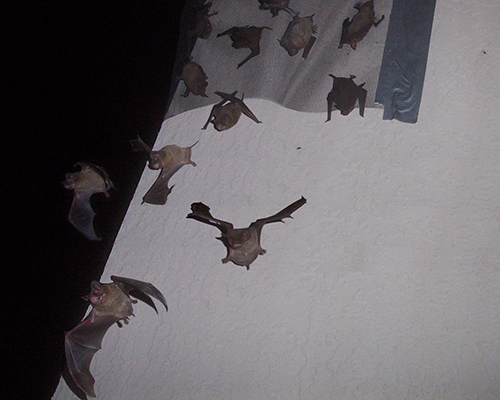
Contact us for bat removal today!
What Our Customers Say
I had a bat flying around in my house at 9pm, and CITY bat removal came right out and caught it in a net.
Sarah Lakewood
I had an annoying colony of bats stuck in my attic for a while before I finally decided to call for help. They were able to quickly and thoroughly solve the problem!
Brandon Chung
They did a great job clearing my attic of bats and didn't hurt any of the creatures.
Charlotte Demers
The technicians at CITY Bat Removal are skilled, professional, and know exactly what they're doing. Would highly recommend.
Mark O'Connor
My house stank of bats and their guano inside my wall. CITY Bat Removal not only removed the bats, they also got rid of the smell!
Alexis Ramirez
.jpg)
How to Find a Bat Hiding in Your House?
If you ever need to deal with a bat in person, you need to keep yourself protected. The species of bats native to North America are generally insect-eaters and their bodies are not much bigger than your thumb. When you are preparing to handle a bat or catch it, find the thickest set of gloves you can, such as a pair of outdoor working gloves. Utilize a flashlight instead of turning on the room lights. Do NOT put your hand anywhere you have not looked at first. You can get injured, the bat can get injured, and there can be more problems in getting it out.
Smaller Than We Think
Of the 1,300 species of bats globally, about 50 species live in North America. There are no wild flying foxes or vampire bats in the US. These species can range in size, although most in the US are not much bigger than a few inches. These guys can roost in the strangest of places and get through smaller spaces than you likely realize.
Mistakes Are Made
If the bat flew into the home from a window or a doorway, and has not encountered anyone, leave its entry point open. Chances are, you will be able to shoo it back out the way it came in.
If you think it might have some sort of disease or virus, close the exits, and start your search. Begin at the top of the room it was last seen in. Thoroughly investigate the curtains and wall hangings. Check behind any large pieces of furniture as these dark areas are safest for a little bat. If there are holes at least 3/8 of an inch in diameter, the bat may have escaped through one.
Check Twice, And Again
Be certain of each room before moving on. It is easy to overlook small things like bats when their wings are folded. Always start at the top, by the ceiling and in the attic. Bats like high, out of the way, dark, and quiet places. You should look at the folds of the tops of curtains. If the bat ‘disappeared' then it might have landed and chosen to hide. Bats are timid creatures who are more scared of you than you are of them.
Do Not Freak Out
If the bat is flying, keep a cool head. It is important to note that you are several thousand times larger than it. Just because it can fly does not mean it is not scared of you. If it is behaving abnormally, let the bat tire and land before getting close to it. Catching a bat mid-flight is tricky and can lead to scratches or bites out of fear from the mammal and is much more work than capturing it when it lands.
Capturing Method
Once it has landed and you have access to it, place a wide mouth jar or container over the bat. Slide a piece of paper between the container and the surface or wall it was on. Make sure the bat is secured in the container without suffocating it. If you know it has not interacted with anyone, you can release the bat outside in the reverse manner.
Releasing Method
Place the container paper-side against a tree. Slowly slide the paper out from between the container and the trunk. With caution and slow movements, remove the container. The bat is now safely in a tree, where it can rest or take off in flight if it chooses. A tree can make the bat feel safer from predators than if it was on the ground. This method of capture and release is generally harmless to the bat.
Check for More
If the bat was alone, it will be easy to deal with. If it is part of a colony that lives nearby, that might be more dangerous. Maternity colonies are made up of females who are pregnant or recently gave birth to a pup. Some males will stay nearby the colony to act as protectors because pups cannot fly for several months.
If you have come across any dark stained areas and little dark brown pellets, you may have stumbled onto a colony. This means that you have a roost and may need professional assistance in dealing with it. A single bat flying around your home may have just made a mistake and needs help getting outside. Finding droppings and other signs of bats can be more difficult to handle.